
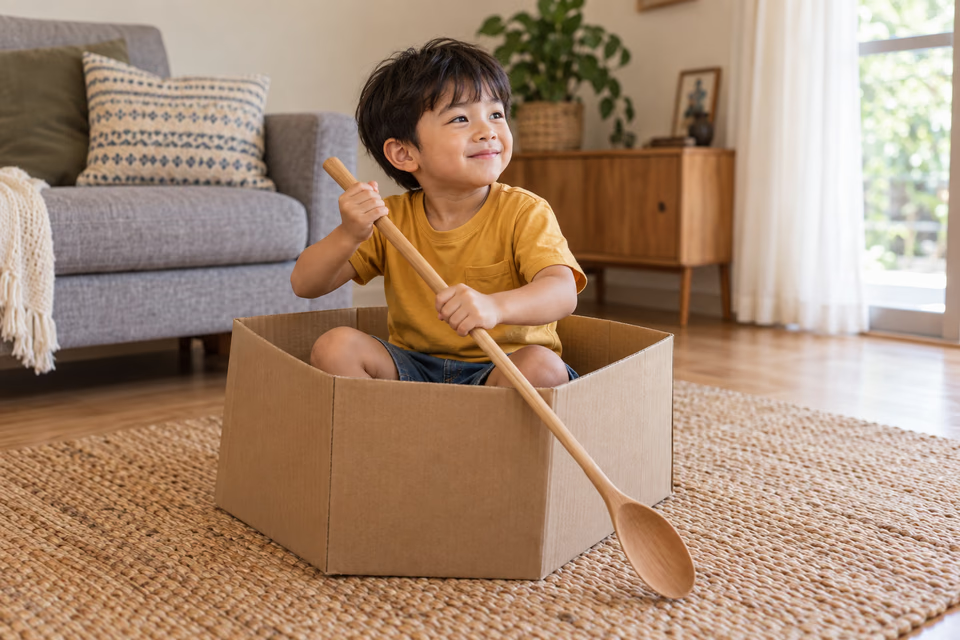
You put out a cardboard box and a few large wooden blocks. Perhaps your child will build a house. Instead, the blocks go into the box, a wooden spoon becomes a paddle, and you are informed that the boat is leaving.
A moment later, the boat is a kitchen. The paddle is back to being a spoon. Nothing has been finished, but plenty has happened. Your child has an idea, and enough room to change it.
Three words for room to choose
Free play puts the child in charge of what to do and how to do it. “Free” refers to that freedom of choice. The American Academy of Pediatrics' clinical report on play describes play as voluntary and driven by the child's own motivation, often without an outside goal to meet.
Open-ended describes the possibilities: there is no single correct result to reproduce. Blocks might become a wall, pretend food or a line across the floor. Unstructured describes how the time unfolds: an adult has not laid out a sequence of tasks or a product to complete. Children can still invent rules, make plans and follow a story of their own.
The ideas overlap, but they are not identical. A box of open-ended materials can become an adult-directed task if everyone must copy the same tower. A child who freely chooses a puzzle is making a real choice, even though the puzzle has one finished arrangement. These words help us notice who is making the decisions; they are not a test that every toy must pass.
A chance to have an idea of their own
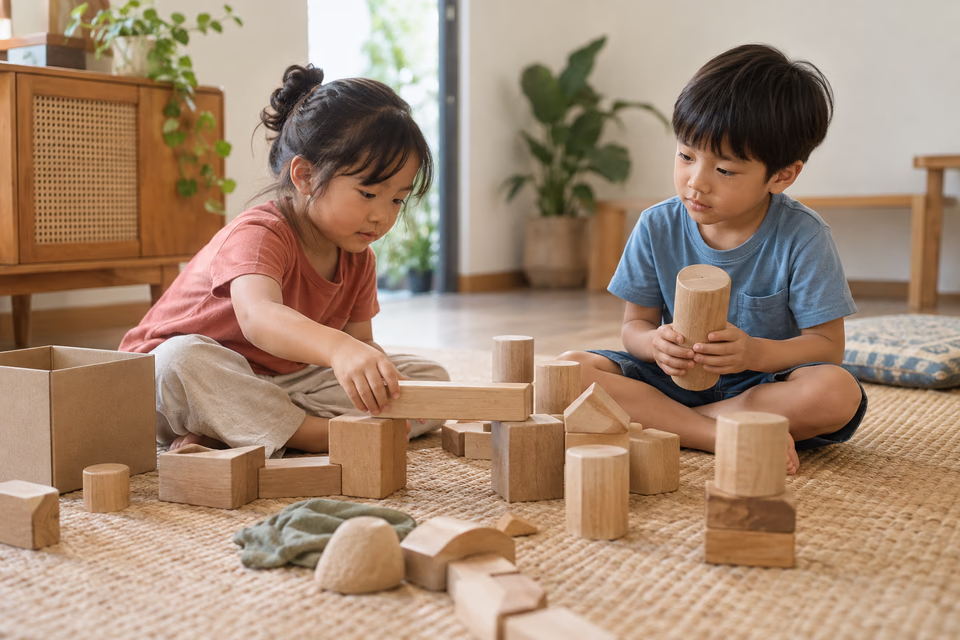
Imagine two children building that cardboard boat together. One wants room for a teddy. The other wants to carry every block aboard. They move things, disagree, ask for help and try another arrangement. The play gives them something they care about enough to work on.
The AAP report describes how play can support language, social interaction and self-regulation. It considers play broadly; it does not promise a particular result from one activity.
A 2014 study by Barker and colleagues looked more specifically at how children spent their time. Among six- to seven-year-olds, more time in less-structured activities was associated with better performance on a task requiring children to organise their own responses. The study included activities beyond free play and could not establish cause and effect. It raises an interesting possibility about practising self-direction, rather than proving that free play improves these skills in younger children.
We also value what does not need measuring: the pleasure of deciding that a spoon is a paddle, or returning to a favourite game simply because it feels good. A child does not need to explain what they have learnt for the time to have mattered.
Let a little of their day unfold on their terms.
Stay close without writing the script
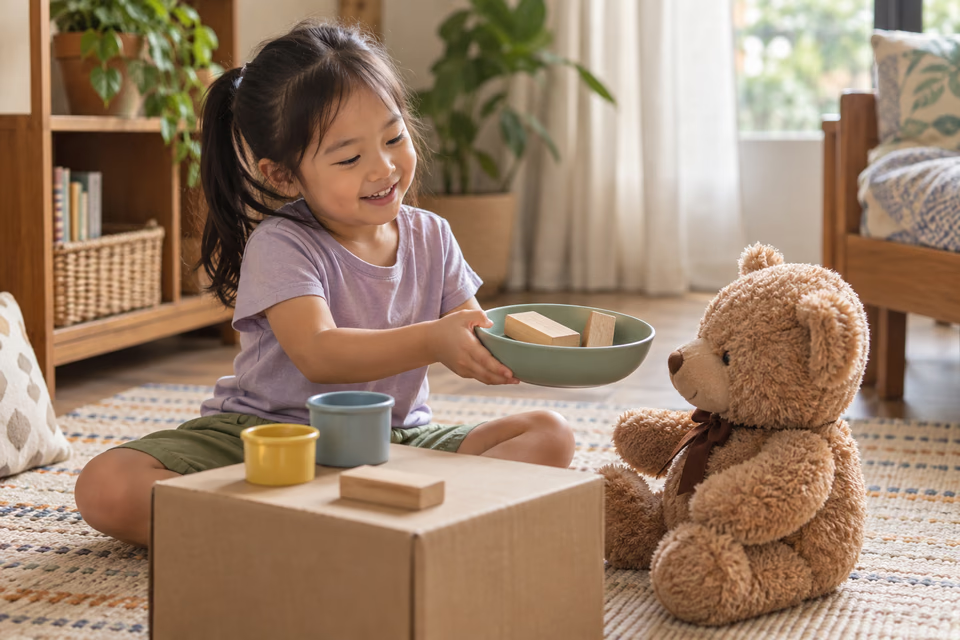
You can be a passenger on the boat. Wait to see where it is going. If your child hands you a block and says it is lunch, you can accept the meal without asking them to name its colour or count the other blocks first.
An interested comment can leave the story open: “You made room for teddy.” A child absorbed in their own idea may need very few words. If they seem stuck or ask for help, try offering just enough to get them going: “Would you like me to hold this while you put it there?” Taking the lead in play can include choosing to have someone beside them.
Adult responsibility remains. We choose suitable materials, supervise for the child's age and needs, and stop unsafe actions. “The spoon stays away from faces” can be a firm limit while the imaginary journey continues. Our article on being kind and firm explores that balance in more detail.
Make a little room in an ordinary day
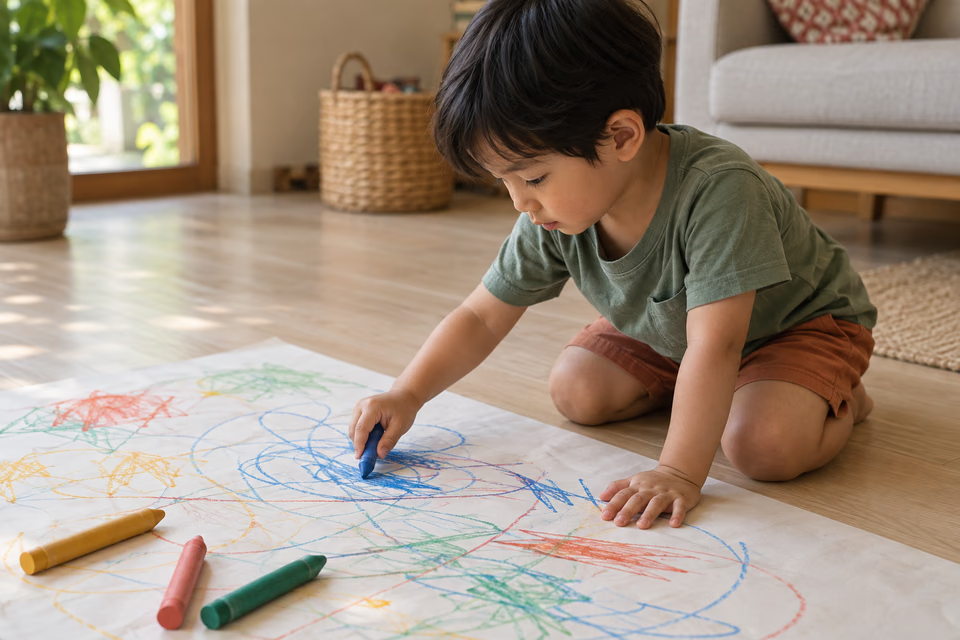
Try a manageable space and a few things your child can use in different ways: large blocks, sturdy containers or paper and crayons. Choose items appropriate to their age and how they explore, especially if they still put things in their mouth. You can offer a starting point, then leave the next move open.
You do not need a beautiful setup or an entire afternoon. A patch of floor before dinner can be enough to begin. When practical, leave time for an idea to develop instead of moving quickly through several activities. Repeating yesterday's game is welcome too; variety is an option, not an assignment.
Some days your child will want company, a familiar game or more help getting started. Structured activities can have a place alongside free play. A family can enjoy a class, follow a recipe together and still keep some time when nobody has decided what the outcome should be. There is no need to turn a full day upside down to make that space.
Why this matters to Nurture Play
We are Xander and Zane, the parents and founders behind Nurture Play. Giving children space for unstructured, open-ended play is the belief we started with. In our sensory play sessions, we prepare the materials while children choose what to explore, whether to join in and when to return to a favourite. Caregivers stay close.
That same belief fits beside a cardboard box at home. The adult makes room, the child brings an idea, and the next thing that happens can still be a surprise.
Sources and further reading
- Yogman, M. and colleagues, American Academy of Pediatrics. The Power of Play: A Pediatric Role in Enhancing Development in Young Children. Pediatrics, 2018; reaffirmed January 2025. A clinical report on play and development, not an evaluation of Nurture Play sessions.
- Barker, J. E. and colleagues. Less-structured time in children's daily lives predicts self-directed executive functioning. Frontiers in Psychology, 2014. An observational study of six- to seven-year-olds; associations do not establish causation.


Ready to play?
Join us for a sensory play session or a workshop — we prepare everything, you bring the curiosity.
Book a session