

It’s time to leave, but your child isn’t finished. You say the play must stop. They crumple to the floor. In moments like this, many grown-ups feel pulled between two choices: comfort the child and risk giving in, or hold the boundary and seem cold.
Authoritative parenting is a third way. The feeling is allowed and the limit can remain. Despite its easily misunderstood name, authoritative does not mean authoritarian. The adult stays responsible for holding the boundary without fear or shame.
Authoritative does not mean authoritarian
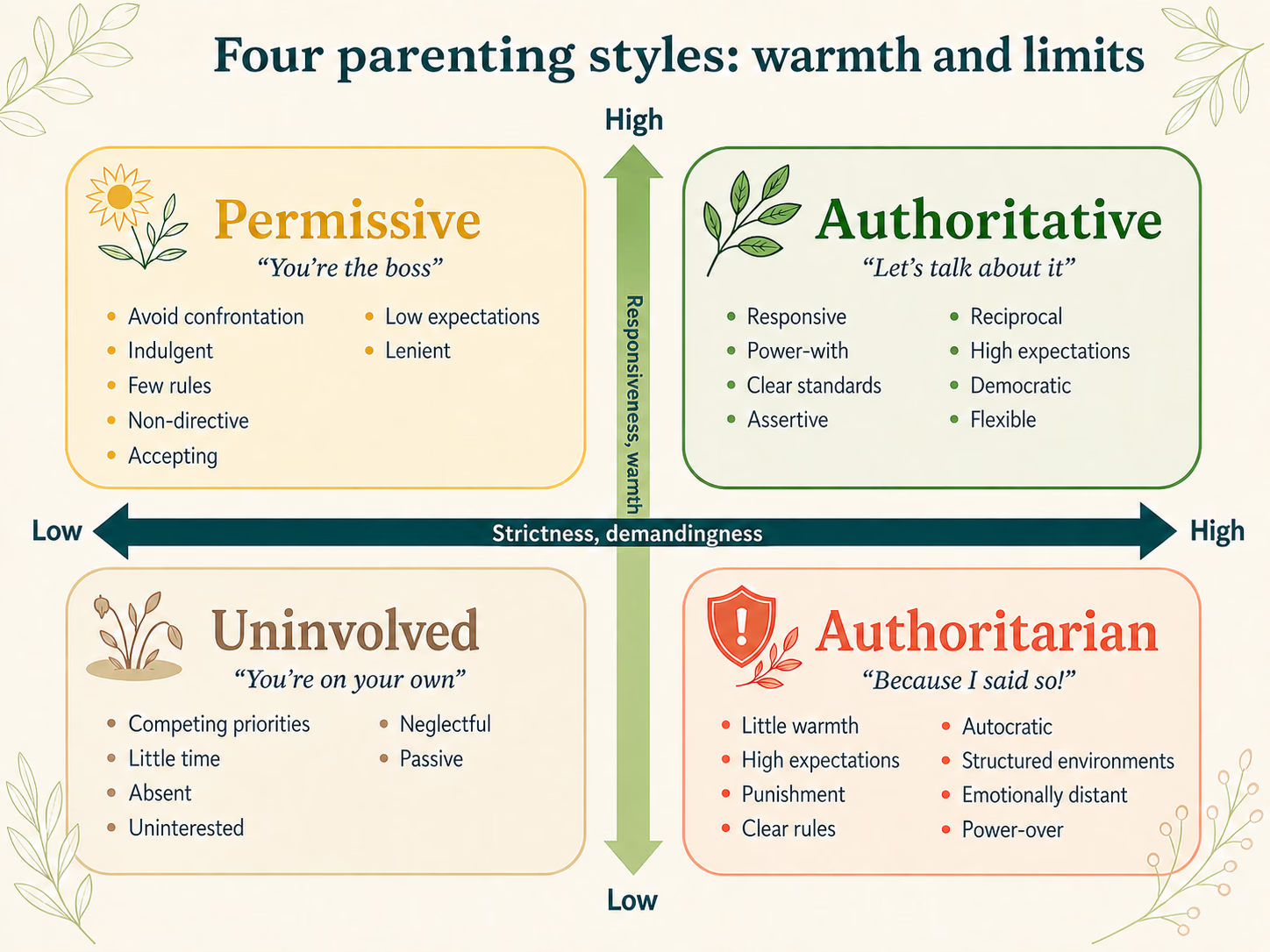
Warmth and limits belong together
The American Psychological Association describes authoritative parenting as responsive and supportive while holding firm limits. The situations below are our practical illustrations of that idea, rather than a script that works for every child.
Authoritative parenting combines emotional responsiveness with clear expectations. Warmth says, “your experience matters to me.” A boundary says, “I will take responsibility for what happens next.” A child doesn’t have to accept the boundary to earn the warmth.
A child reaches for the paints after craft time has ended. The limit might be, “The paints are finished for today.” The warmth is, “You wanted to keep going. Stopping is hard.” Naming the disappointment doesn’t reopen the paints, and closing the paints doesn’t mean ignoring the disappointment.
Welcome the feeling, guide the action
All feelings are allowed. Not every behaviour is. Anger may arrive when a turn ends, but hitting still has to be stopped. Excitement may make a child want to fling rice through the air, but other people still deserve to feel safe. One sentence covers both: “You are angry. I will not let you hit.”
“You are naughty” describes the child. “I will stop this action, and I am still here with you” describes the behaviour and the relationship. That difference protects the child’s dignity while the adult stays firmly in charge of the boundary.
All feelings are allowed. Not every behaviour is.
Say less, make the limit clear
When emotions are high, a long lecture is hard to take in. Short, concrete words are easier: “The water stays in the tray.” “I will not let you push.” “It is time to go.” A calm tone helps, and a calm sentence can still be final.
Whenever possible, say what is allowed too: “You may throw the beanbag into this basket.” “You can stamp your feet here.” If safety requires it, the adult may need to move the object, block the hit or help the child leave. The aim is to follow through without adding humiliation or threat.
Put choices inside the boundary
A small, genuine choice gives a child some say without handing over an adult decision. “It is time to leave. Would you like to walk or hold my hand?” “The paints are closing. Shall we put away the red or the blue first?” The boundary stays fixed. The child chooses how to get through it.
Choices work best when both answers are truly acceptable. Asking “shall we go home now?” when staying is impossible only invites a struggle over a decision that has already been made. Clear limits feel more trustworthy when adults say plainly what is fixed and where the child still gets to choose.
The boundary stays fixed. The child chooses how to get through it.
Consistent, with room for exceptions
Consistency means children can usually predict what the adult will do. The same rule can still be applied differently in different situations. Age, hunger, tiredness, sensory needs and safety all matter. A thoughtful exception is still consistent when the reason is clear, and a limit can change when new information shows it was unnecessary.
Adults will sometimes lose patience, speak too sharply or set a boundary badly. Repair belongs in authoritative parenting too: “I shouted. That was not okay. The limit is still the same, and I want to say it again more calmly.” The apology is for the shouting. The boundary stays, and the child sees that respect runs in both directions.
What children are practising
This approach doesn’t promise instant cooperation. Children may protest, test the same limit tomorrow and need the adult to repeat it many times. The aim is a child who gradually learns that big feelings pass, that boundaries do not end connection, and that the adults around them mean what they say.
Over time, the adult shows the child a pattern: notice the feeling, pause the action, find a safer next step and reconnect. The child will still be using that pattern long after any one bedtime or trip home is forgotten.
Boundaries do not end connection.
How we practise it at Nurture Play
In our sessions, children choose how and whether to approach each material. We won’t force a hesitant child to touch foam, and we won’t shame an excited child for needing help. We also hold the limits that keep people and materials safe: rice stays away from faces, tools are shared, and water stays in its play area.
Kind and firm can sound simple on the page and feel much harder in a noisy moment. Start with one sentence: name what your child feels, state what you will not allow, then offer the next safe possibility. The boundary can hold steady while your child remains fully welcome beside it.
Sources and further reading
- American Psychological Association. Parenting styles. Background to the distinction between warmth and limits in parenting styles.
- American Academy of Pediatrics. What's the best way to discipline my child?. Guidance on calm limits, listening, modelling behaviour and repairing after a mistake.


Ready to play?
Join us for a sensory play session or a workshop — we prepare everything, you bring the curiosity.
Book a session