
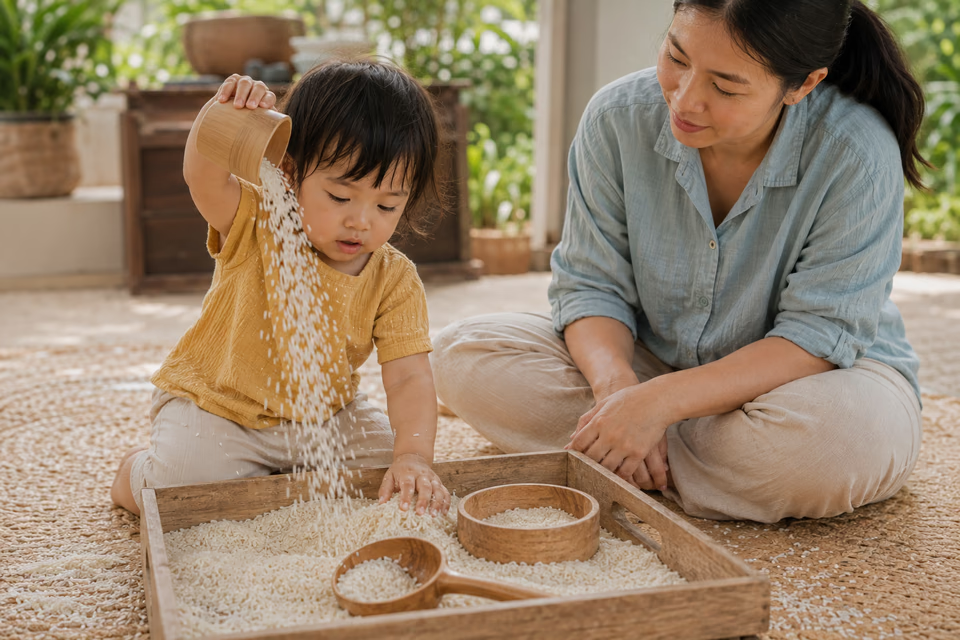
A toddler kneels at a tray of dry rice. They fill a cup, tip it out and fill it again. And again. By about the eleventh pour, most of us are wondering what the point is.
Watch a few more and we might find that each pour is a little different. This one from higher up. This one slowly, eyes on the falling grains. This one straight onto the mat, to see what you’ll say. That is how a two-year-old learns, and it’s the reason sensory play is worth taking seriously.
Each pour is a little different. That is how a two-year-old learns.
Senses first, words later
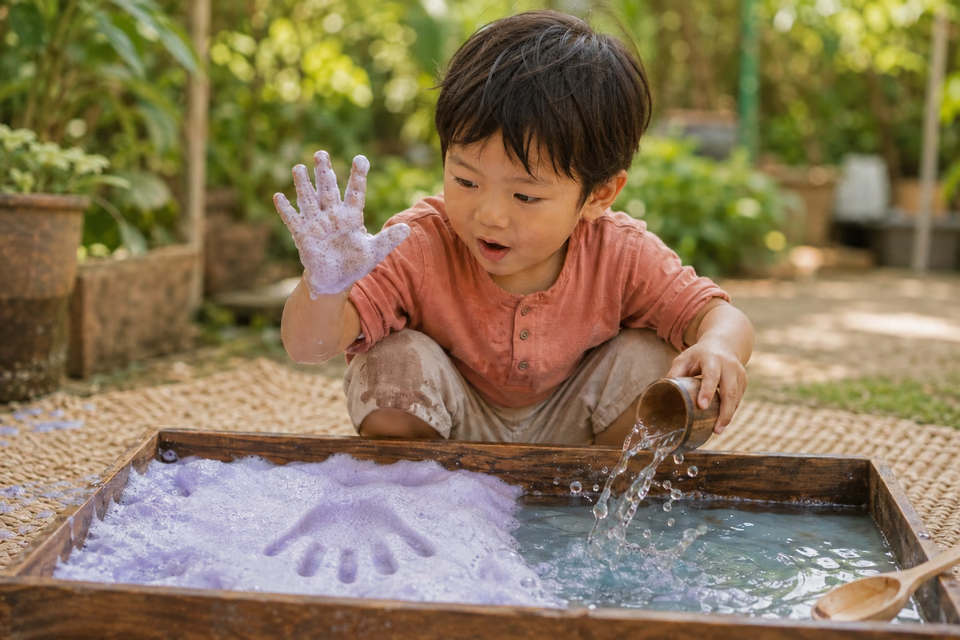
Young children learn about the world by acting on it. Long before they can ask what something is, they find out by touching, dropping, squeezing and tipping. Sensory play gives that instinct good material, the kind that responds. Rice pours and scatters. Foam squishes and holds a fingerprint. Water splashes, and then it’s gone from the cup and all over the mat.
Every one of those responses is information. Twenty minutes of pouring is the same test run twenty times with one thing changed: a fuller cup, a higher tip, a faster hand. The result shifts a little each time, and so does the child’s idea of how rice behaves.
Watch a session for long enough and the same six things keep showing up, whatever the material. They are the six we summarise on our sensory play page.
The American Academy of Pediatrics' report The Power of Play describes how play can support development and relationships. The six areas below are our way of connecting that broader evidence to everyday play; they are not measured outcomes of our sessions.
Growing bodies: small muscles, big job
Watch the hands. Scooping needs the wrist to turn. Picking one bean out of a bowl needs the thumb and forefinger to close together. Squeezing a wet sponge, stirring thick dough and pouring without spilling all ask the small muscles of the hand to do something precise, then do it again a little better.
Bigger movements count too: reaching across a wide tray, crouching at a water channel, crawling through a larger setup, carrying a full jug across the garden without losing half of it on the way. Balance, coordination and whole-body movement are all activated.
These movements offer practice in handling tools and coordinating hands. Similar skills are used to hold a spoon, do up a button or grip a crayon; a session does not promise a particular developmental milestone.
Curious minds: where questions come naturally
Give a child something that responds and the questions follow. What happens when the cup is full? Why does this one sink when that one floats? Can the mixture be made thicker, or runnier, or faster down the ramp?
Chasing those questions, children get direct experience of volume, texture, weight, movement, pattern and cause and effect. They also practise a way of thinking: predict, compare, adjust, try again.
Why does this one sink when that one floats?
Growing language: a word means more once you’ve felt it
Try explaining sticky to someone who has never touched honey. Sensory play gives children the feeling first, so when the word comes they already know what it means. Cold, heavy, bubbly, empty, overflowing: each one makes sense faster when it arrives with a fistful of the real thing.
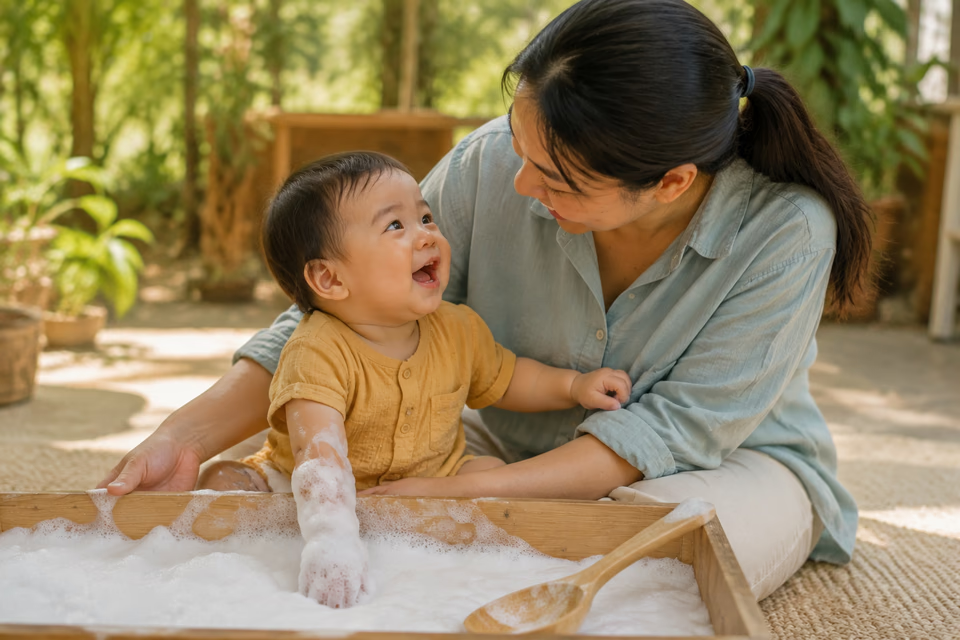
This starts well before speech. A baby who reaches into the foam, catches your eye and squeals is already in a conversation. Gestures, faces, sounds and looking at the same thing together come first. Pointing, showing, copying and naming come next.
A word makes sense faster when it arrives with a fistful of the real thing.
Confidence and independence: nobody is marking their work
There is no right way to play with a tub of coloured water. No finished product to copy, no result that counts as wrong. Most of a young child’s day is decided by someone else: when to get up, what to wear, when to eat and when to leave. Twenty minutes at the water tray is theirs.
Children choose which material to investigate, how long to stay with it and what to try next. When an idea doesn’t work, they change it. The decision is theirs from start to finish, and so is the discovery at the end of it.
Emotional and sensory awareness: learning what “too much” feels like
The same freedom lets children learn about themselves. One texture feels wonderful. Another feels like too much. With a trusted adult close by and no pressure to join in, a child can approach a new sensation slowly, step back when they need to and return when they’re ready. Noticing “that is too much for me” and acting on it is a skill worth having at any age.
There can be a quieter side to this too. A child may become absorbed in stirring dough or watching water run down a ramp. Another child may find the same setting tiring or overwhelming. Following their cues matters more than expecting play to make them calm.
Connection through play: “Come and see what I made!”
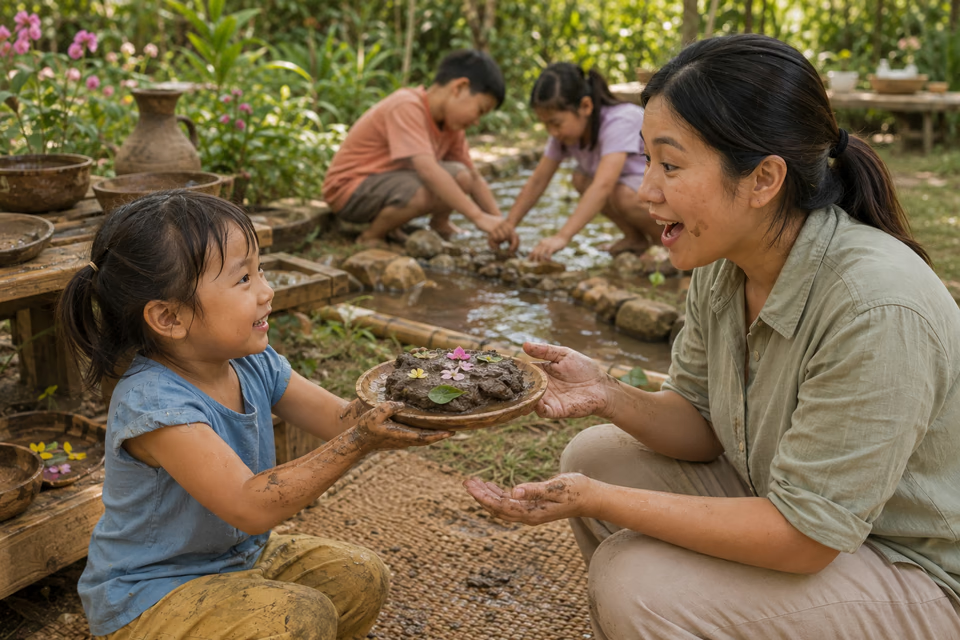
Some of the best moments in sensory play happen between people. A shared grimace over something slimy. Taking turns with the one good scoop. A child holding up a mud pie for you to admire. Play like this tells a child, without a word: I see what you’re doing, and I like being here with you.
Sensory play gives children and their caregivers an easy way to enjoy being together. As they pour, stir and build, they share attention, follow each other’s ideas and respond to small looks, sounds and gestures. A caregiver might copy what their child is doing, wonder aloud about what will happen next or simply stay close and watch. These moments of attention and enjoyment help children feel seen and strengthen the bond between them.
Harvard's Center on the Developing Child describes responsive exchanges as serve and return. You can notice them in everyday family life as well as during play.
Why we make room for it at Nurture Play
This is why our sensory play sessions have no set programme. Children within the selected session's age range move between textures, water, foam and colour at their own pace, and go back to favourites as often as they like. Caregivers stay close, join in or simply watch. When the rice ends up on the floor, we sweep it.
Come and make a beautiful mess with us. New session dates are announced on Instagram first.
Sources and further reading
- Yogman, M. and colleagues. The Power of Play: A Pediatric Role in Enhancing Development in Young Children. Pediatrics, 2018. A clinical report about play broadly, not an evaluation of Nurture Play or a specific sensory activity.
- Center on the Developing Child at Harvard University. Serve and return. Background on responsive exchanges between children and caregivers.

Ready to play?
Join us for a sensory play session or a workshop — we prepare everything, you bring the curiosity.
Book a session